
Certificate: View Certificate
Published Paper PDF: View PDF
Kavya Rao
Independent Researcher
Karnataka, India
Abstract
Gamification in Social Emotional Learning (SEL) harnesses game-design elements—such as points, badges, narrative quests, and peer challenges—to foster students’ emotional awareness, self-management, social skills, and particularly empathy. This manuscript investigates the impact of a structured, six-week gamified SEL intervention on middle-school students’ empathy levels, drawing on self-determination theory and established empathy development frameworks. A quasi-experimental design with 120 participants (60 in the gamified SEL group, 60 in a control group receiving traditional SEL lessons) measured changes in Perspective Taking and Empathic Concern via the Interpersonal Reactivity Index (IRI) before and after the intervention. Not only did the gamified group demonstrate statistically significant increases in both empathy subscales—with large effect sizes (Cohen’s d > 0.8)—but they also reported heightened engagement, sustained motivation, and deeper peer connections. Qualitative reflections further revealed emergent themes of enhanced perspective awareness, intrinsic motivation through playful challenges, and stronger collaborative bonds. Importantly, the intervention’s use of real-world community projects and peer-feedback loops translated classroom learning into tangible prosocial behaviors, suggesting that gamified SEL can bridge the gap between theory and practice. These findings underscore gamification’s potential to transform SEL from a passive, discussion-based activity into an active, student-centered experience. By integrating autonomy-supportive elements, competence-building tasks, and relatedness-driven collaborations, educators can cultivate a lasting culture of empathy and mutual respect. The study concludes with practical guidelines for curriculum designers, recommendations for teacher training on game-based pedagogy, and avenues for future research—such as digital platform comparisons and long-term follow-up studies—to further validate and refine gamified SEL approaches.
Keywords
Gamification, social emotional learning, empathy development, middle school, educational intervention
References
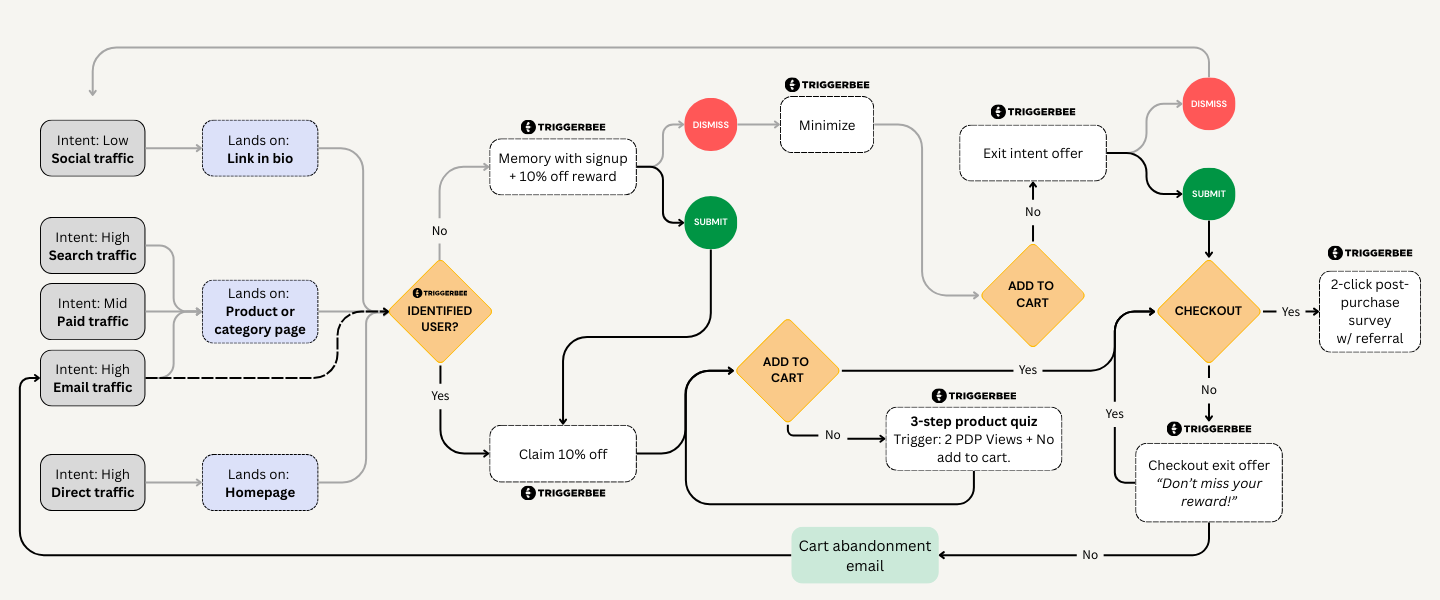
- https://triggerbee.com/wp-content/uploads/tbimages/2025/05/Gamification-Flowchart2.png
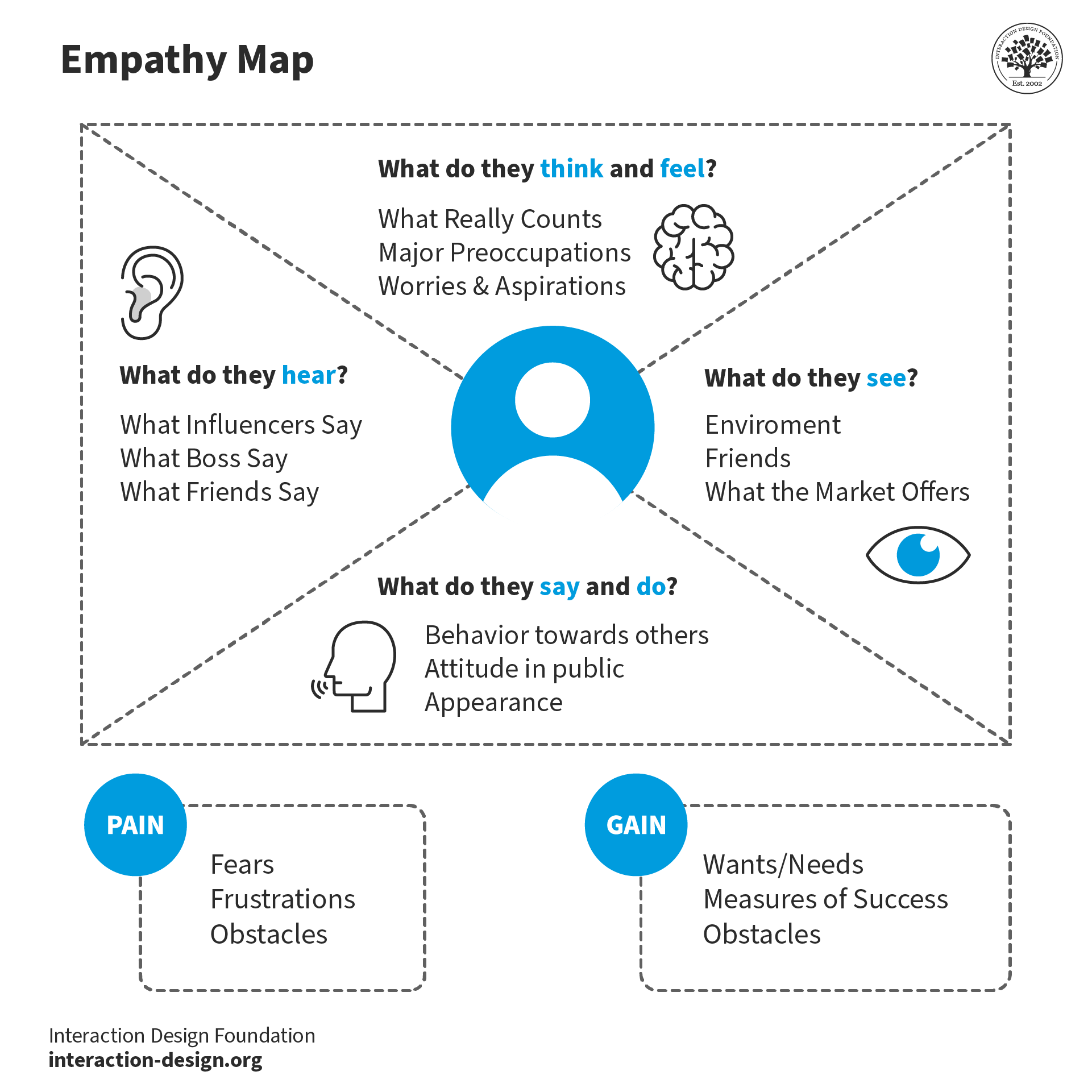
- https://public-images.interaction-design.org/literature/articles/materials/4-ixdf-empathy-map.png
- Barab, S. A., Gresalfi, M., & Ingram‑Goble, A. (2010). Transformational play: Using games to position person, content, and context. Educational Researcher, 39(7), 525–536. https://doi.org/10.3102/0013189X10386593
- de Freitas, S., & Jarvis, S. (2006). A framework for developing Serious Games to meet learner needs. British Journal of Educational Technology, 37(3), 397–411. https://doi.org/10.1111/j.1467-8535.2006.00640.x
- Deci, E. L., & Ryan, R. M. (2000). The “what” and “why” of goal pursuits: Human needs and the self‑determination of behavior. Psychological Inquiry, 11(4), 227–268. https://doi.org/10.1207/S15327965PLI1104_01
- Eisenberg, N., Spinrad, T. L., & Sadovsky, A. (2010). Empathy‑related responding in children. In M. Lewis, J. M. Haviland‑Jones, & L. F. Barrett (Eds.), Handbook of emotions (3rd ed., pp. 443–459). Guilford Press.
- Hamari, J., Koivisto, J., & Sarsa, H. (2014). Does gamification work? — A literature review of empirical studies on gamification. In Proceedings of the 47th Hawaii International Conference on System Sciences (pp. 3025–3034). IEEE. https://doi.org/10.1109/HICSS.2014.377
- Jacobs, G. E., & Murray, L. (2013). The role of play in children’s empathy development: A training study. Journal of Applied Developmental Psychology, 34(3), 297–305. https://doi.org/10.1016/j.appdev.2012.12.002
- Kang, N., & Wagner, C. (2013). Digital game‐based learning in social emotional learning: Examining the relationship between game design and SEL outcomes. Computers & Education, 60(1), 58–71. https://doi.org/10.1016/j.compedu.2012.06.007
- Kapp, K. M. (2012). The gamification of learning and instruction: Game‑based methods and strategies for training and education. Pfeiffer.
- Oberle, E., Domitrovich, C. E., Meyers, D. C., & Weissberg, R. P. (2016). Establishing systemic social and emotional learning approaches in schools. School Psychology Review, 45(2), 138–152. https://doi.org/10.17105/SPR-2016-0026.V45-2
- Robson, K., Plangger, K., Kietzmann, J. H., McCarthy, I., & Pitt, L. (2016). Is it all a game? Understanding the principles of gamification. Business Horizons, 59(4), 411–420. https://doi.org/10.1016/j.bushor.2016.03.006
- Ryan, R. M., & Deci, E. L. (2017). Self‑determination theory: Basic psychological needs in motivation, development, and wellness. Guilford Press.
- Schonert‑Reichl, K. A., & Roeser, R. W. (2016). Social and emotional learning: Past, present, and future. In R. W. Roeser & K. A. Schonert‑Reichl (Eds.), Handbook of mindfulness in education: Integrating theory and research into practice (pp. 3–20). Springer.
- Yoder, N. (2014). Game design for social emotional learning. Phi Delta Kappan, 95(8), 58–62. https://doi.org/10.1177/003172171409500811
- Zhu, C., & Lu, X. (2017). Collaborative learning badges in virtual environments: Fostering motivation and empathy. Educational Technology & Society, 20(3), 61–75.