
Certificate: View Certificate
Published Paper PDF: View PDF
Mohan Reddy
Independent Researcher
Telangana, India
Abstract
Value education and digital citizenship are critical components of modern middle school curricula, fostering both moral development and responsible online behavior among adolescents. As digital native learners navigate increasingly complex online environments, integrating value‑based instruction with digital literacy empowers students to make ethical decisions, exhibit empathy, and safeguard their personal and communal well‑being. This manuscript explores theoretical foundations and pedagogical practices for embedding value education—such as respect, integrity, and social responsibility—into digital citizenship curricula for grades 6–8. Drawing upon Kohlberg’s stages of moral development, Bandura’s social learning theory, and Ribble’s nine elements of digital citizenship, the study examines how these frameworks can synergistically inform curriculum design. A survey of 100 middle school students assessed current levels of digital ethics, empathy, and responsible online behaviors. Methodologically, the research employed a mixed‑methods questionnaire comprising Likert‑scale and open‑ended items to capture both quantitative measures (e.g., frequency of cyberbullying interventions) and qualitative insights (e.g., personal reflections on online dilemmas). Results indicate that students exposed to integrated value‑based digital citizenship modules report higher self‑efficacy in handling cyberethics challenges, greater empathy toward online peers, and improved discernment regarding digital footprints. Furthermore, qualitative themes reveal students’ enhanced willingness to intervene in bullying scenarios, deeper reflection on post‑publishing consequences, and proactive peer support. The enhanced curriculum model proposed here weaves moral dilemmas into digital tasks—such as crafting privacy settings based on integrity principles and role‑playing respectful online dialogues—to reinforce ethical reasoning. Teacher facilitation strategies include guided debriefs, reflective journaling, and peer‑led discussions, aligning with social learning processes to model exemplary behavior. By integrating formal assessments—like scenario‑based digital ethics evaluations—and informal checks—such as empathy journals—the framework promotes both behavioral and emotional growth. The study concludes with practical recommendations for curriculum developers, teacher training imperatives, and suggestions for longitudinal research to validate sustained impact across diverse educational contexts.
Keywords
Value education, digital citizenship, moral development, middle school, online ethics, empathy, curriculum integration
References
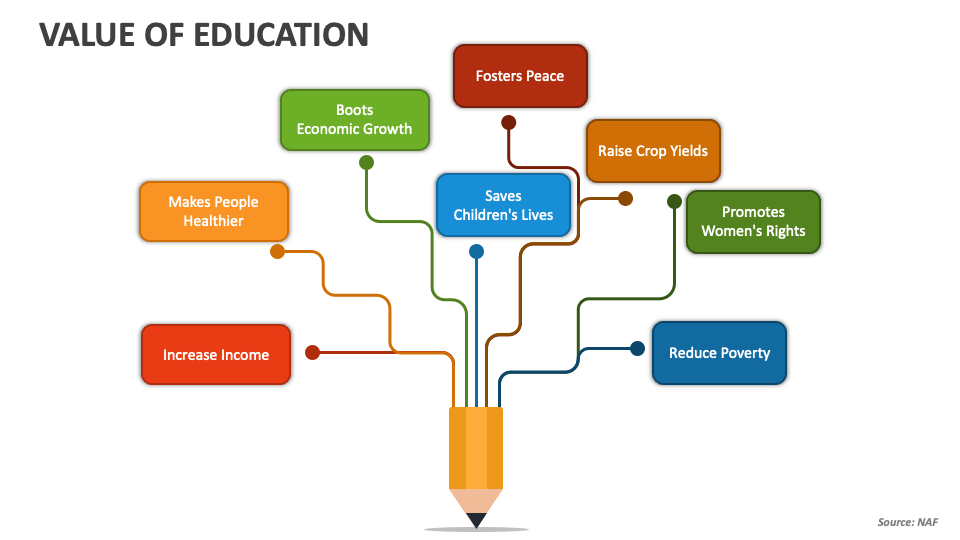
- https://www.collidu.com/media/catalog/product/img/8/5/85828560f2acfd7d69e161a36130601e39292dbf66b2ecb1897c1915a10a7aff/value-of-education-slide2.png
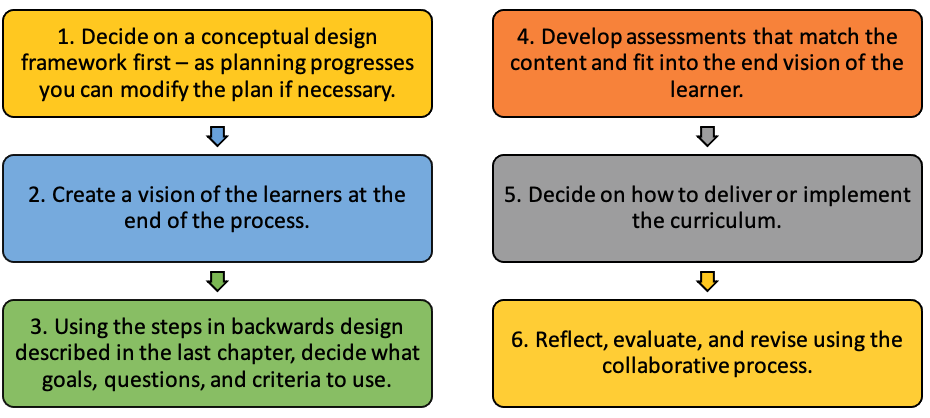
- https://oer.pressbooks.pub/app/uploads/sites/18/2020/11/c11f1-1.png
- Bandura, A. (1977). Social Learning Theory. Englewood Cliffs, NJ: Prentice‑Hall.
- Battistich, V., Solomon, D., Watson, M., & Schaps, E. (2004). Diverse communities in schools: Promoting social and moral development in early adolescence. Journal of Adolescent Research, 19(1), 36–62.
- Casey, A., Bailey, J., Rice, M., & Roberts, L. (2015). Youth empowerment through digital rights education. Computers & Education, 82, 1–12.
- Choi, M., Noh, M., & Lee, H. (2015). Development and validation of a digital citizenship behavior scale. Educational Technology Research and Development, 63(3), 445–464.
- Erstad, O., & Sefton‑Green, J. (2013). Identity, community, and learning lives in the digital age. Cambridge Journal of Education, 43(4), 517–531.
- Jones, C., & Mitchell, K. J. (2016). Defining and measuring youth digital citizenship. New Media & Society, 18(8), 2063–2079.
- Kohlberg, L. (1981). Essays on Moral Development, Volume One: The Philosophy of Moral Development. San Francisco, CA: Harper & Row.
- Lickona, T. (1991). Educating for Character: How Our Schools Can Teach Respect and Responsibility. New York, NY: Bantam Books.
- Livingstone, S., & Haddon, L. (2009). Kids Online: Opportunities and Risks for Children. London, UK: London School of Economics and Political Science.
- Mishna, F., Abu‑Saad, H., & Khoury‑Kassabri, M. (2010). Strategies educators use to prevent and manage cyberbullying incidents in schools. Children and Youth Services Review, 32(10), 1574–1580.
- Ohler, J. (2011). Digital Community, Digital Citizen: How Ethics and Privacy Can Shape Our Online Lives. Thousand Oaks, CA: Corwin.
- Ribble, M. (2015). Digital Citizenship in Schools: Nine Elements All Students Should Know. Eugene, OR: International Society for Technology in Education.
- Ribble, M., Bailey, G., & Ross, T. (2004). Digital citizenship: Addressing appropriate technology behavior. Learning & Leading with Technology, 32(1), 6–9.
- Rheingold, H. (2012). Net Smart: How to Thrive Online. Cambridge, MA: MIT Press.
- Selwyn, N. (2009). Education 2.0? Designing the Web for Learning? New York, NY: Routledge.
- (2013). Beijing Consensus on ICTs, Education and Gender Equality. Paris, France: UNESCO Publishing.
- Valcke, M., Schellens, T., van Keer, H., & Gerhuard, C. (2007). Students’ attitudes towards ICT in education: A cross‑sectional analysis. Computers in Human Behavior, 23(3), 1397–1412.
- Willard, N. (2007). Cyberbullying and Cyberthreats: Responding to the Challenge of Online Social Aggression, Threats, and Distress. Champaign, IL: Research Press.