
Certificate: View Certificate
Published Paper PDF: View PDF
Rajeev Sinha
Independent Researcher
India
Abstract
The rapid proliferation of short‑term online certification courses has transformed professional development paradigms, offering flexible, affordable, and targeted learning opportunities that cater to diverse learner needs. This study evaluates the comparative effectiveness of three primary course formats—self‑paced video modules, live instructor‑led webinars, and blended micro‑credential programs—by surveying 200 working professionals across technology, healthcare, and business sectors. Effectiveness metrics include knowledge acquisition, skill application, learner satisfaction, and career impact. Results indicate that blended programs yield the highest overall gains in skill application (mean increase = 32%), while self‑paced courses offer maximal scheduling flexibility but lower hands‑on proficiency improvement (mean increase = 18%). Live webinars scored highest in learner engagement and satisfaction (average rating = 4.2/5). Regression analyses reveal that industry alignment and course interactivity are significant predictors (p < 0.01) of post‑course performance.
Beyond these core findings, the study also explores demographic and contextual moderators of course success. For instance, participants with over ten years of experience exhibited greater performance gains in blended formats, suggesting that experienced professionals benefit more from applied learning. Conversely, early‑career participants favored live webinars for the networking opportunities they provided. Qualitative feedback highlighted the importance of real‑world case studies and project‑based assessments in enhancing perceived relevance. Platform usability emerged as a critical factor in learner retention for self‑paced courses, underscoring the need for intuitive interfaces and mobile compatibility.
Implications for stakeholders are multifold. Learners can make informed choices based on their career stage and learning preferences. Educators and instructional designers are guided toward emphasizing interactivity, real‑world application, and seamless user experiences. Employers gain evidence‑based criteria for selecting external training partners and tailoring internal upskilling programs. Ultimately, this comprehensive comparative analysis offers actionable insights to optimize the design, delivery, and adoption of short‑term online certifications in a dynamically changing professional landscape.
Keywords
Online certification effectiveness; self-paced learning; live webinars; blended micro‑credentials; professional development
References
- https://www.researchgate.net/publication/374329985/figure/fig4/AS:11431281194460214@1696094746037/Flow-chart-of-personalized-course-recommendation_Q320.jpg
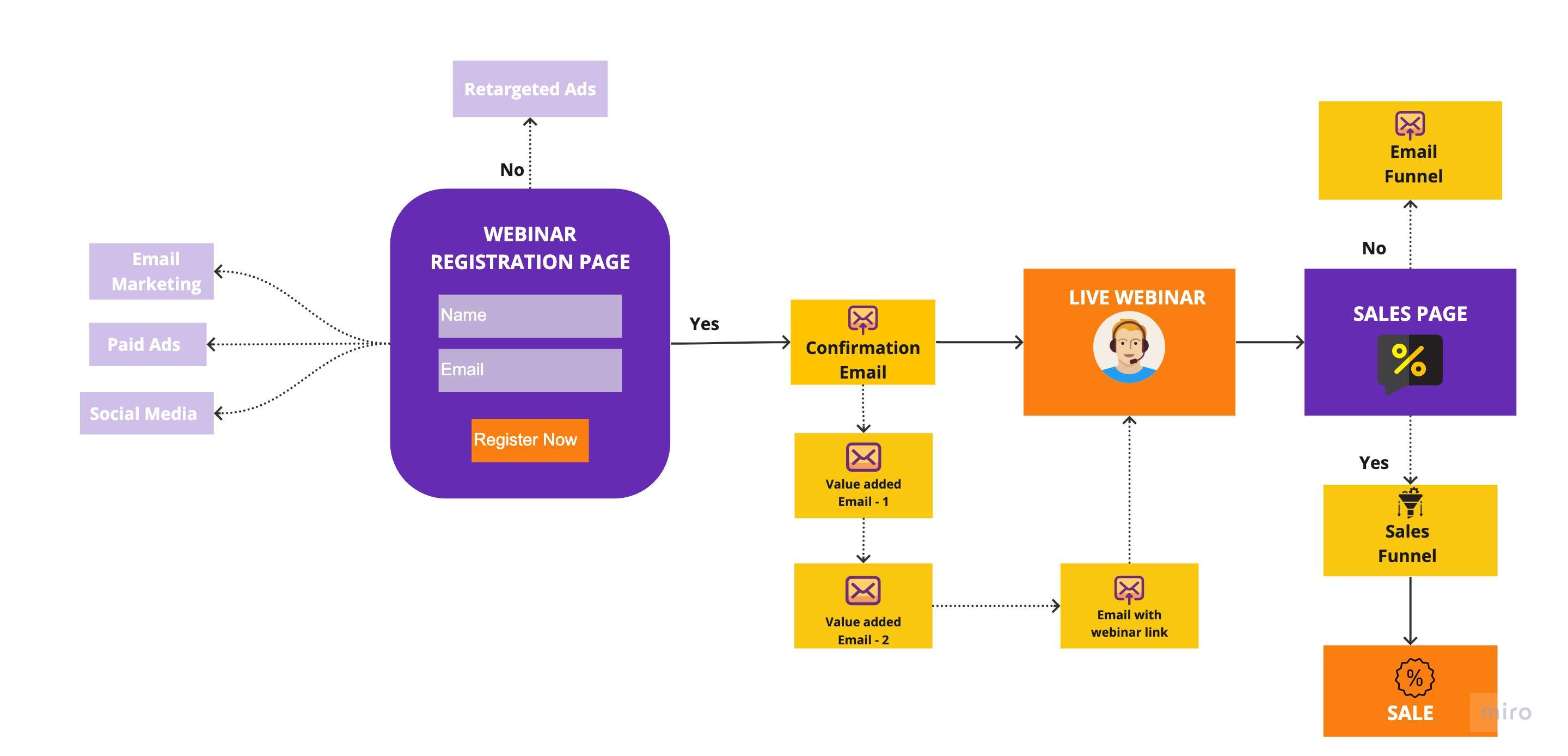
- https://livestorm.imgix.net/1127/1679951653-1-webinar-funnel-flowchart-created-with-miro.jpg
- Kirkpatrick, D. L., & Kirkpatrick, J. D. (2016). Kirkpatrick’s four levels of training evaluation (3rd ed.). ATD Press.
- Kolb, D. A. (2015). Experiential learning: Experience as the source of learning and development (2nd ed.). Pearson Education.
- Zhou, M., & Brown, D. (2015). Educational learning theories: 2nd edition. ETPL.