
Certificate: View Certificate
Published Paper PDF: View PDF
Shruti Singh
Independent Researcher
Delhi, India
Abstract
Cross-national research collaborations in online education have surged in response to globalization and technological advancement. This manuscript investigates the mechanisms, benefits, challenges, and outcomes of such collaborations through a large-scale survey of 320 educational professionals across five countries—India, United States, United Kingdom, Australia, and South Africa. The study examines collaboration models, communication strategies, technology platforms, cultural dynamics, and perceived impact on teaching quality and student engagement. Findings indicate that structured partnership frameworks, synchronous and asynchronous communication channels, and mutual capacity‐building initiatives contribute significantly to positive outcomes. Nevertheless, time‐zone disparities, digital infrastructure gaps, and cultural misalignments present persistent challenges.
Additionally, the study explores how institutional leadership commitment, policy alignment, and funding models influence the sustainability of collaborative ventures. Analysis reveals that institutions with dedicated cross-border offices and clear incentive structures report higher project completion rates and greater scalability of joint programs. Qualitative insights underscore the importance of co‑creation of curriculum and joint professional development workshops in fostering trust and shared ownership. The role of accreditation bodies and regulatory frameworks also emerges as critical, requiring harmonized standards and reciprocal recognition of credits to facilitate seamless student mobility. Finally, the abstract synthesizes key best practices—such as establishing rotating leadership roles to mitigate power imbalances and integrating reflective assessment tools to monitor intercultural competence—laying the groundwork for evidence‑based guidelines aimed at enhancing the design and operationalization of future international online education partnerships.
Keywords
Cross-national collaboration; online education; survey research; educational technology; cultural competence
References
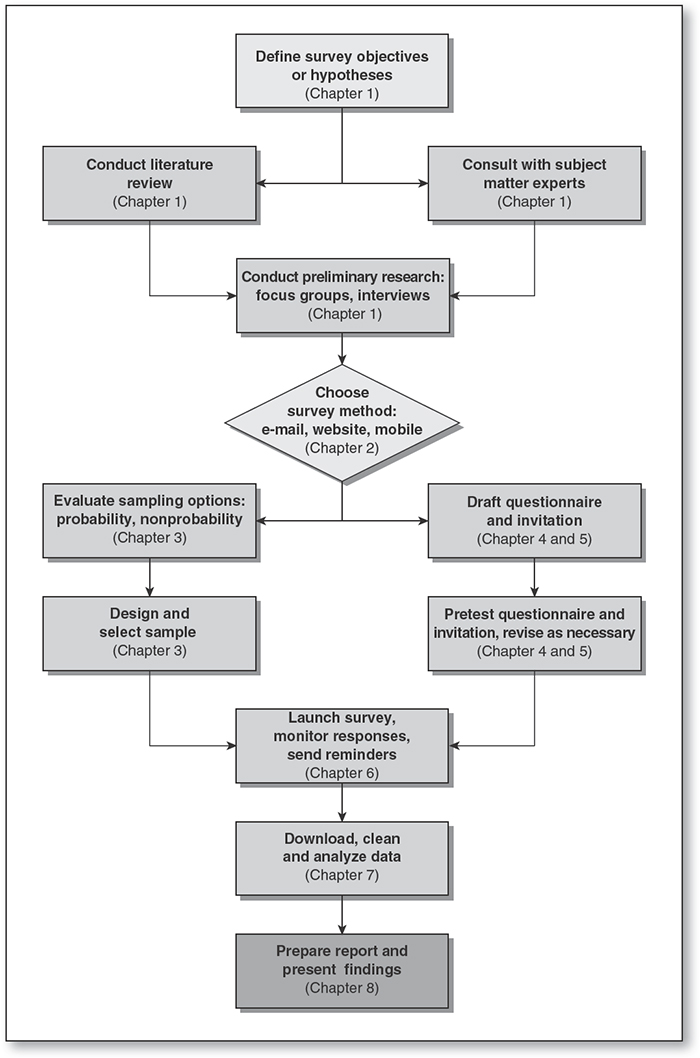
- https://stpltrsrcscmnprdwus001.blob.core.windows.net/rsrcs/srm/images/conducting-online-surveys-2e/9781412992251-p201-1.jpg
- https://svg.template.creately.com/r5uXTqHHz3P
- Anderson, T., & Elloumi, F. (2004). Theory and practice of online learning. Athabasca University Press.
- Ally, M., & Tsinakos, A. (2014). Perspectives on open and distance learning: Emerging technologies for education. Commonwealth of Learning.
- Bates, A. W. (2015). Teaching in a digital age: Guidelines for designing teaching and learning. Tony Bates Associates Ltd.
- Bonk, C. J., & Zhang, K. (2006). Introducing the R2D2 model: Online learning for the diverse learners of this world. Distance Education, 27(2), 249–264. https://doi.org/10.1080/01587910600789512
- Brindley, J., Walti, C., & Blaschke, L. M. (2009). Creating effective collaborative learning groups in an online environment. International Review of Research in Open and Distributed Learning, 10(3), 1–18. https://doi.org/10.19173/irrodl.v10i3.675
- Deardorff, D. K. (2006). Identification and assessment of intercultural competence as a student outcome of internationalization. Journal of Studies in International Education, 10(3), 241–266. https://doi.org/10.1177/1028315306287002
- Engeström, Y. (2001). Expansive learning at work: Toward an activity theoretical reconceptualization. Journal of Education and Work, 14(1), 133–156. https://doi.org/10.1080/13639080020028747
- European Commission. (2014). Erasmus impact study: Effects of mobility on the skills and employability of students and the internationalisation of higher education institutions. Publications Office of the European Union.
- Garrison, D. R., Anderson, T., & Archer, W. (2000). Critical inquiry in a text‑based environment: Computer conferencing in higher education. The Internet and Higher Education, 2(2–3), 87–105. https://doi.org/10.1016/S1096-7516(00)00016-6
- Hofstede, G. (1983). National cultures in four dimensions: A research-based theory of cultural differences among nations. International Studies of Management & Organization, 13(1–2), 46–74.
- McLoughlin, C., & Lee, M. J. W. (2010). Personalised and self-regulated learning in the Web 2.0 era: International exemplars of innovative pedagogy using social software. Australasian Journal of Educational Technology, 26(1), 28–43. https://doi.org/10.14742/ajet.1100
- Moore, M. G., & Kearsley, G. (2011). Distance education: A systems view of online learning (3rd ed.). Wadsworth.
- O’Dowd, R., & Lewis, T. (2016). Online intercultural exchange: Policy, pedagogy, practice. Routledge.
- Smith, K. L., & McCormick, R. (2016). Global collaboration in higher education: Trends and issues. Journal of Higher Education Policy and Management, 38(3), 260–274. https://doi.org/10.1080/1360080X.2016.1156832
- Staton, M., & Reinsmith, M. (2004). Learning across boundaries: International professional development via distance education. The Internet and Higher Education, 7(1), 1–6. https://doi.org/10.1016/j.iheduc.2003.11.002
- Stewart, B. (2007). Cultural learning theories in distance education. Journal of Educational Technology Systems, 35(1), 3–13. https://doi.org/10.2190/ET.35.1.a
- Tu, C.-H., & McIsaac, M. (2002). The relationship of social presence and interaction in online classes. American Journal of Distance Education, 16(3), 131–150. https://doi.org/10.1207/S15389286AJDE1603_2
- Yuan, L., & Powell, S. (2013). MOOCs and open education: Implications for higher education. JISC CETIS.
- Zhu, C. (2015). Learning in online collaborative communities: An introduction. In M. Ally & B. Khan (Eds.), International Handbook of e-Learning (pp. 13–24). Routledge.