
Certificate: View Certificate
Published Paper PDF: View PDF
Karan Kapoor
Independent Researcher
India
Abstract
The integration of simulation-based learning within paramedical vocational courses has emerged as a pivotal pedagogical approach to bridge theory and practice, enhance clinical reasoning, and improve patient‑care outcomes. This manuscript examines the role and efficacy of both high‑fidelity and low‑fidelity simulations across disciplines such as nursing, emergency medical services, medical laboratory technology, and radiography. Drawing upon a mixed‑methods design, we surveyed 200 paramedical students and instructors from five Indian vocational institutes, capturing utilization patterns, perceived learning gains, and implementation challenges. Findings indicate that 87% of respondents report improved critical thinking skills, 82% enhanced procedural competence, and 75% greater confidence in clinical settings. Participants also highlighted the value of standardized patient encounters for communication skills and VR modules for rare emergency scenarios. Despite these benefits, barriers such as limited physical infrastructure, high operational costs, and gaps in faculty expertise constrain widespread adoption. Qualitative responses underscore the importance of structured debriefing, the need for scenario diversity to mirror real‑world complexities, and the role of peer‑assisted learning in reinforcing skill mastery. Based on these insights, we propose a scalable simulation framework that integrates competency‑based checkpoints, faculty development pathways, and cost‑effective blended modalities. Policy recommendations include curriculum alignment with national health workforce standards and targeted funding to establish regional simulation centers. This comprehensive analysis underscores simulation’s transformative potential in paramedical education and offers a roadmap for institutions seeking to optimize training outcomes and ultimately enhance healthcare delivery.
Keywords
Simulation-based learning; paramedical education; clinical competence; vocational training; high-fidelity simulation
References
- https://media.springernature.com/lw685/springer-static/image/art%3A10.1007%2Fs10758-025-09837-7/MediaObjects/10758_2025_9837_Fig2_HTML.png
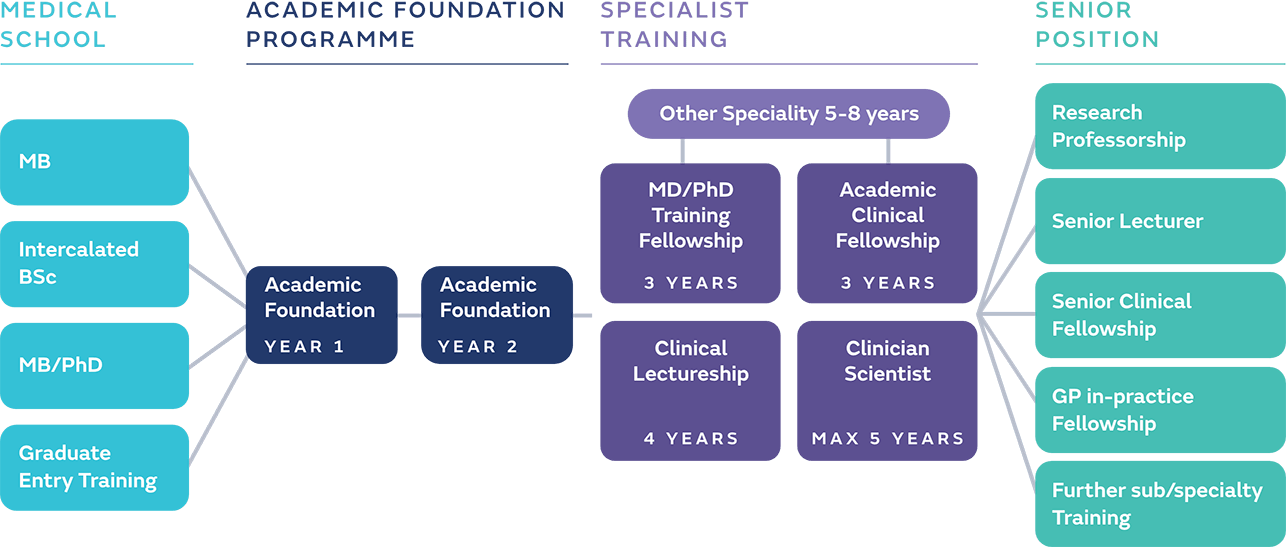
- https://www.catch.ac.uk/assets/images/flow-chart1.png
- Cook, D. A., Hamstra, S. J., Brydges, R., Zendejas, B., Szostek, J. H., Wang, A. T., … & Hatala, R. (2013). Comparative effectiveness of instructional design features in simulation‐based education: Systematic review and meta‐analysis. Medical Teacher, 35(1), e867–e898. https://doi.org/10.3109/0142159X.2012.714886
- Dieckmann, P., Molin Friis, S., Lippert, A., & Østergaard, D. (2012). The art and science of debriefing in simulation: Ideal and practice. Medical Teacher, 34(7), e29–e32. https://doi.org/10.3109/0142159X.2012.687035
- Forneris, S. G., Peden-McAlpine, C., McNelis, A. M., Carney, M., Neal, D., & Cullen, D. (2015). Progressive levels of simulation fidelity and nursing student self-efficacy: A mixed-methods study. Nurse Education Today, 35(3), e1–e7. https://doi.org/10.1016/j.nedt.2014.12.002
- Gaba, D. M. (2004). The future vision of simulation in health care. Quality and Safety in Health Care, 13(suppl 1), i2–i10. https://doi.org/10.1136/qshc.2004.009878
- Hayden, J. K., Smiley, R. A., Alexander, M., Kardong-Edgren, S., & Jeffries, P. R. (2014). The NCSBN national simulation study: A longitudinal, randomized, controlled study replacing clinical hours with simulation in prelicensure nursing education. Journal of Nursing Regulation, 5(2), S3–S40. https://doi.org/10.1016/S2155-8256(15)30062-4
- Issenberg, S. B., McGaghie, W. C., Petrusa, E. R., Gordon, D. L., & Scalese, R. J. (2005). Features and uses of high‐fidelity medical simulations that lead to effective learning: A BEME systematic review. Medical Teacher, 27(1), 10–28. https://doi.org/10.1080/01421590500046924
- Jeffries, P. R. (Ed.). (2005). Simulation in nursing education: From conceptualization to evaluation. National League for Nursing.
- Kneebone, R. (2003). Simulation in surgical training: Educational issues and practical implications. Medical Education, 37(3), 267–277. https://doi.org/10.1046/j.1365-2923.2003.01440.x
- Lateef, F. (2010). Simulation‐based learning: Just like the real thing. Journal of Emergencies, Trauma, and Shock, 3(4), 348–352. https://doi.org/10.4103/0974-2700.70743
- McGaghie, W. C., Issenberg, S. B., Petrusa, E. R., & Scalese, R. J. (2010). A critical review of simulation‐based medical education research: 2003–2009. Medical Education, 44(1), 50–63. https://doi.org/10.1111/j.1365-2923.2009.03547.x
- Motola, I., Devine, L. A., Chung, H. S., Sullivan, J. E., & Issenberg, S. B. (2013). Simulation in healthcare education: A best evidence practical guide. AMEE Guide No. 82. Medical Teacher, 35(10), e1511–e1530. https://doi.org/10.3109/0142159X.2013.818632
- Nehring, W. M., & Lashley, F. R. (2004). Nursing simulation: A review of the past 40 years. Simulation & Gaming, 35(2), 270–293. https://doi.org/10.1177/1046878104263543
- Norman, G. R., & Eva, K. W. (2010). Diagnostic error and clinical reasoning. Medical Education, 44(1), 94–100. https://doi.org/10.1111/j.1365-2923.2009.03507.x
- Okuda, Y., Bryson, E. O., DeMaria, S., Jacobson, L., Quinones, J., Shen, B., & Levine, A. I. (2009). The utility of simulation in medical education: What is the evidence? Mount Sinai Journal of Medicine, 76(4), 330–343. https://doi.org/10.1002/msj.20127
- Reilly, A., Spratt, C., & Dalrymple, K. (2012). The use of clinical simulation to teach the nursing process to undergraduate students. Nurse Education in Practice, 12(1), 8–12. https://doi.org/10.1016/j.nepr.2011.02.013
- Salas, E., Wildman, J. L., & Piccolo, R. F. (2009). Using simulation‐based training to enhance management education. Academy of Management Learning & Education, 8(4), 559–573. https://doi.org/10.5465/amle.8.4.zqr559