
Certificate: View Certificate
Published Paper PDF: View PDF
Uday Bansal
Independent Researcher
India
Abstract
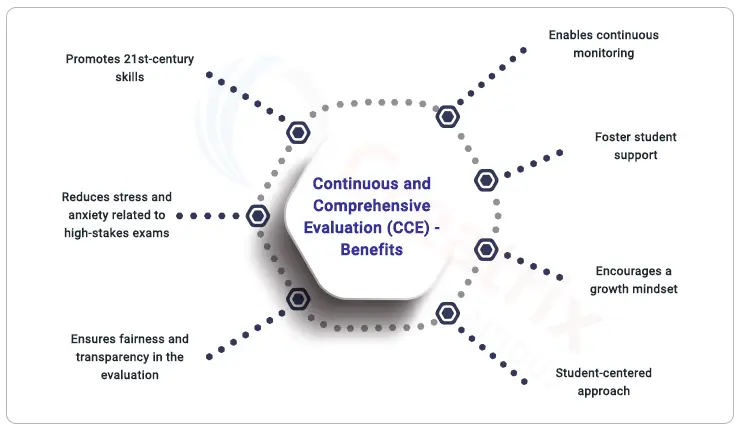
Continuous and Comprehensive Evaluation (CCE) represents a paradigm shift in educational assessment, emphasizing holistic appraisal of learner progress through varied formative and summative measures. This classroom‑level impact study investigates the efficacy of CCE implementation in fifteen urban secondary school classrooms over an academic year. Employing a convergent parallel mixed‑methods design, quantitative data were gathered via academic performance metrics, attendance records, and psychosocial scales; qualitative insights were obtained through teacher interviews, student focus groups, and structured classroom observations. Findings indicate statistically significant improvements in student engagement (p < .01), collaborative behaviors, and metacognitive awareness post‑CCE adoption. Moreover, formative assessments contributed to reduced test anxiety, elevated intrinsic motivation, and more equitable learning opportunities across diverse learner profiles. Teachers reported enhanced ability to tailor instruction based on real‑time feedback, though they also highlighted increased planning demands and challenges in maintaining consistency of rubric application. Importantly, digital assessment tools emerged as critical enablers, streamlining feedback loops and data tracking, especially in larger classes. The study further identifies contextual factors—such as administrative support, professional development quality, and resource availability—that moderate CCE’s effectiveness. Overall, when supported by targeted training, appropriate technological infrastructure, and workload management strategies, CCE fosters a learner‑centered environment conducive to deeper conceptual understanding, critical thinking, and 21st‑century skill development. Implications for policy, teacher education, and scalable implementation models are discussed in light of these findings.
Keywords
Continuous and Comprehensive Evaluation, formative assessment, student engagement, learner-centered pedagogy, educational reform
References
- https://dxavhl1p2dibq.cloudfront.net/sites/default/files/Continuous-and-Comprehensive-Evaluation-%28CCE%29-Benefits.webp
- https://media.springernature.com/lw685/springer-static/image/art%3A10.1186%2F2193-9004-3-9/MediaObjects/40173_2013_Article_42_Fig8_HTML.jpg
- Appleton, J. J., Christenson, S. L., Kim, D., & Reschly, A. L. (2006). Measuring cognitive and psychological engagement: Validation of the Student Engagement Instrument. Journal of School Psychology, 44(5), 427–445.
- Black, P., & Wiliam, D. (1998). Assessment and classroom learning. Assessment in Education: Principles, Policy & Practice, 5(1), 7–74.
- Braun, V., & Clarke, V. (2006). Using thematic analysis in psychology. Qualitative Research in Psychology, 3(2), 77–101.
- Brookhart, S. M. (2011). Formative assessment strategies for every classroom: An ASCD action tool. ASCD.
- (2011). Continuous and Comprehensive Evaluation: A Handbook for Teachers. Central Board of Secondary Education.
- Gupta, R. (2013). Project-based learning and science achievement: A Delhi case study. Indian Journal of Educational Research, 22(3), 45–57.
- Joshi, P. (2014). Teacher perceptions and challenges in implementing CCE: Insights from Maharashtra. Journal of Teacher Education and Practice, 12(1), 23–31.
- Kumar, A. (2014). Shifting paradigms: From examination-driven learning to continuous evaluation. Educational Review, 66(4), 509–525.
- National Curriculum Framework (NCF). (2005). National curriculum framework 2005. National Council of Educational Research and Training.
- National Council of Educational Research and Training (NCERT). (2008). A handbook for continuous and comprehensive evaluation. NCERT.
- Pellegrino, J. W., & Hilton, M. L. (Eds.). (2012). Education for life and work: Developing transferable knowledge and skills in the 21st century. National Academies Press.
- Sadler, D. R. (1989). Formative assessment and the design of instructional systems. Instructional Science, 18(2), 119–144.
- Singh, K. (2012). Implementation barriers of continuous assessment in Indian schools. Asia-Pacific Journal of Education, 32(3), 301–314.
- Spielberger, C. D. (1980). Test Anxiety Inventory: Preliminary professional manual. Consulting Psychologists Press.
- Vygotsky, L. S. (1978). Mind in society: The development of higher psychological processes (M. Cole, V. John-Steiner, S. Scribner, & E. Souberman, Eds.). Harvard University Press.
- Wiliam, D. (2011). Embedded formative assessment. Solution Tree Press.
- Wiliam, D., & Thompson, M. (2007). Integrating assessment with instruction: What will it take to make it work? In C. A. Dwyer (Ed.), The future of assessment: Shaping teaching and learning (pp. 53–82). Lawrence Erlbaum Associates.