
Certificate: View Certificate
Published Paper PDF: View PDF
Gagan Thakur
Independent Researcher
India
Abstract
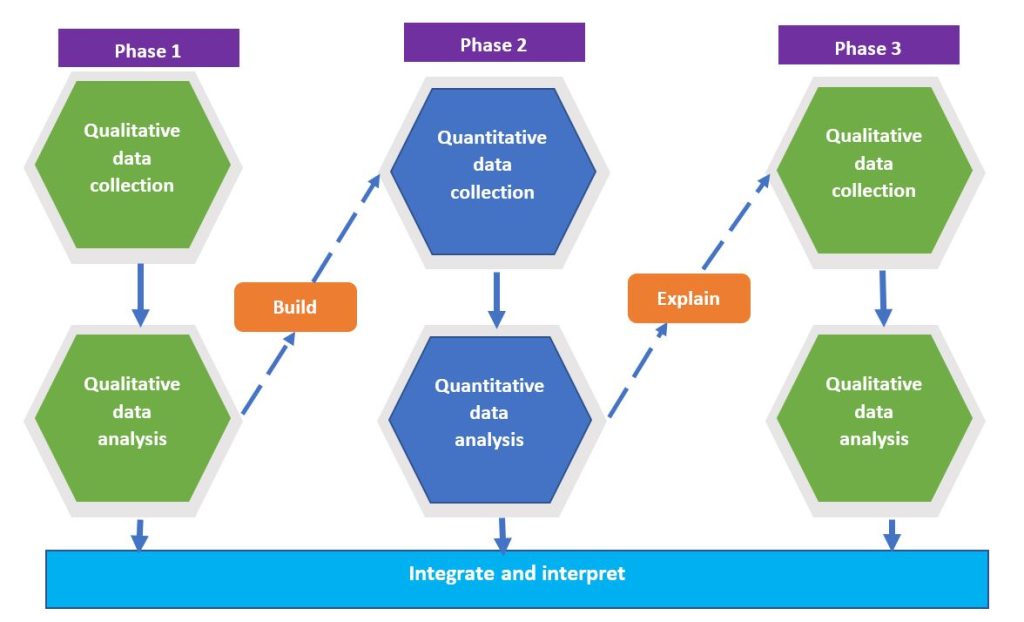
The ubiquity of digital platforms has transformed children’s everyday experiences, reshaping how they learn, play, and socialize. Concurrently, concerns have emerged regarding the impact of prolonged digital engagement on children’s attentional capacities and overall cognitive development. This study investigates changes in attention span among children aged 6–12 who regularly use digital platforms, comparing high‑engagement (≥ 3 hours/day) and low‑engagement (≤ 1 hour/day) cohorts over a six‑month period. Employing a convergent mixed‑methods approach—quantitative assessments via the Conners’ Continuous Performance Test (CPT‑3) and qualitative insights from semi‑structured parental interviews—this research evaluates three core attention metrics: sustained attention, selective attention, and reaction‑time stability. Quantitative results reveal that high‑engagement children exhibit statistically significant declines in sustained attention (18 % increase in omission errors, p < .01) and selective attention (15 % increase in commission errors, p < .05), alongside greater variability in reaction times. Qualitative themes highlight parents’ concerns about distractibility in low‑stimulus settings, heightened impulsivity linked to autoplay and reward‑driven design features, and the emergence of self‑regulation strategies when structured screen‑time protocols are enforced. By integrating objective performance data with lived family experiences, the study elucidates how rapid stimulus novelty, multitasking pressures, and conditioned reward loops collectively undermine attention systems during a critical developmental window. Findings underscore the necessity of balanced digital literacy programs, evidence‑based usage guidelines, and “attention‑friendly” platform designs that reduce unnecessary notifications and pacing overload. This manuscript provides actionable recommendations for educators, app developers, and policymakers seeking to safeguard attentional health while preserving the educational and social benefits of digital media.
Keywords
Attention span; digital platforms; children; sustained attention; selective attention; divided attention; Conners’ CPT‑3; mixed methods
References
- https://ars.els-cdn.com/content/image/1-s2.0-S1364661315000285-gr1.jpg
- https://jcu.pressbooks.pub/app/uploads/sites/60/2023/02/5.7-1024×622.jpg
- Bavelier, D., Achtman, R. L., Mani, M., & Föcker, J. (2012). Neural bases of selective attention enhancement by action video game playing. Vision Research, 61, 132–143.
- Bediou, B., Adams, D. M., Mayer, R. E., Tipton, E., Green, C. S., & Bavelier, D. (2018). Meta‑analysis of action video game impact on perceptual, attentional, and cognitive skills. Psychological Bulletin, 144(1), 77–110.
- Braun, V., & Clarke, V. (2006). Using thematic analysis in psychology. Qualitative Research in Psychology, 3(2), 77–101.
- Diamond, A. (2013). Executive functions. Annual Review of Psychology, 64, 135–168.
- Griffiths, M. D., Kuss, D. J., & King, D. L. (2018). Video game play and educational outcomes: A systematic review. Educational Psychology Review, 30, 945–963.
- Green, C. S., & Bavelier, D. (2003). Action video game modifies visual selective attention. Nature, 423(6939), 534–537.
- Kwon, M., & Park, B. (2017). The relationship between smartphone use and cognitive function in children. Journal of Child Health Care, 21(3), 353–362.
- Lenhart, A. (2015). Teens, social media & technology overview 2015. Pew Research Center.
- Marsh, E. J., & Einav, S. (2015). Attention spans and digital distraction: A review. Journal of Applied Developmental Psychology, 42, 232–239.
- Ophir, E., Nass, C., & Wagner, A. D. (2009). Cognitive control in media multitaskers. Proceedings of the National Academy of Sciences, 106(37), 15583–15587.
- Parasuraman, R. (1987). Sustained attention in detection and discrimination. Psychological Bulletin, 101(4), 630–673.
- Posner, M. I., & Rothbart, M. K. (2007). Research on attention networks. In S. I. Posner (Ed.), Cognitive neuroscience of attention (pp. 45–59). American Psychological Association.
- Ra, C. K., Cho, J., Stone, M. D., De La Cerda, J., Goldenson, N. I., Moroney, E., … & Leventhal, A. M. (2018). Association of digital media use with subsequent symptoms of attention‑deficit/hyperactivity disorder among adolescents. JAMA, 320(3), 255–263.
- Rosen, L. D., Carrier, L. M., & Cheever, N. A. (2013). The impact of technology on adolescents’ face‑to‑face communication and mental health. Journal of Adolescence, 36(5), 467–472.
- Swing, E. L., Gentile, D. A., Anderson, C. A., & Walsh, D. A. (2010). Television and video game exposure and the development of attention problems. Pediatrics, 126(2), 214–221.
- Unsworth, N., & Robison, M. K. (2017). The importance of stimulus‑specific processing: Examining individual differences in working memory capacity and attention. Journal of Experimental Psychology: Human Perception and Performance, 43(6), 1039–1057.
- Valkenburg, P. M., Piotrowski, J. T., Hermanns, J., & de Leeuw, R. (2013). Developing a scale to assess three styles of television mediation. Journal of Broadcasting & Electronic Media, 58(1), 58–80.