
Certificate: View Certificate
Published Paper PDF: View PDF
Mahima Krishnan
Independent Researcher
Karnataka, India
Abstract
Cross‐cultural assessment in international online schools presents unique challenges and opportunities as educators strive to evaluate student learning fairly and effectively across diverse linguistic, cultural, and educational backgrounds. This manuscript investigates existing practices, theoretical frameworks, and empirical findings related to cross‐cultural assessment in fully online international K–12 and higher‐education settings. Drawing on constructivist and sociocultural theories, it examines how assessment design, implementation, and interpretation can either mitigate or exacerbate cultural bias. A mixed‐methods study was conducted involving a survey of 250 teachers and 500 students from 15 international online schools across five world regions, complemented by 20 in‐depth interviews with assessment specialists. Quantitative analyses revealed significant associations between culturally responsive assessment practices and student satisfaction, while qualitative findings highlighted the importance of contextualized rubrics, flexible demonstrations of learning, and ongoing teacher professional development.
To deepen understanding of how assessments can honor diverse ways of knowing, this study also explores multilingual considerations, including the role of translanguaging strategies and plain‐language guidelines to reduce linguistic barriers. The research uncovers the power of multimedia assessment portfolios—where students integrate text, audio, video, and artifacts from their communities—as a means to surface cultural assets and promote agency. Further, it examines how digital tools (e.g., e‑rubric platforms with embedded exemplar galleries) can support transparency and consistency in scoring across geographically dispersed classrooms. By integrating student and family voices through focus groups and reflective journals, the study underscores the value of participatory assessment design that fosters trust and mutual accountability.
Educational implications underscore the need for collaborative rubric development, stakeholder training in intercultural competence, and the integration of culturally grounded performance tasks into curricula. Recommendations include practical guidelines for designing culturally adaptive assessments, scalable frameworks for teacher training, and a call for longitudinal research into student outcomes and the long‐term impacts of culturally responsive assessment. This enhanced abstract positions the study as a roadmap for educators and policymakers committed to equitable, inclusive online learning environments that validate and leverage the rich cultural capital students bring to their educational journeys.
Keywords
Cross‐cultural assessment; international online schools; cultural bias; assessment design; intercultural competence
References
- https://www.researchgate.net/publication/321015016/figure/fig1/AS:613868111929357@1523368971720/Flowchart-of-the-process-of-translation-and-cross-cultural-adaptation-of-the-Quality-of.png
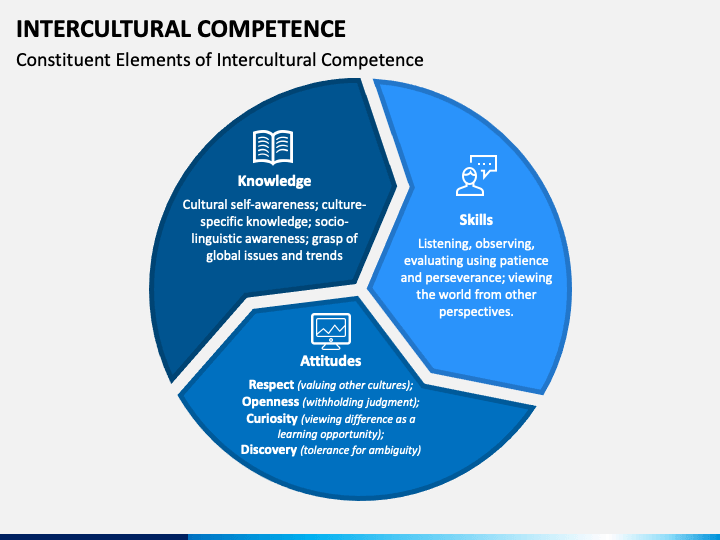
- https://cdn.sketchbubble.com/pub/media/catalog/product/optimized1/0/3/03682b37466c99ec7e42f320250d606ae9ab6ef4a2db4749f2dde47cc02b29a8/intercultural-competence-slide6.png
- Bennett, R. E., & Gitomer, D. H. (2010). Transforming K–12 assessment: Integrating accountability testing, formative assessment, and professional support. Harvard Education Press.
- Black, P., & Wiliam, D. (2009). Developing the theory of formative assessment. Educational Assessment, Evaluation and Accountability, 21(1), 5–31. https://doi.org/10.1007/s11092‑008‑9068‑5
- Braun, V., & Clarke, V. (2006). Using thematic analysis in psychology. Qualitative Research in Psychology, 3(2), 77–101. https://doi.org/10.1191/1478088706qp063oa
- Cummins, J. (2000). Language, power and pedagogy: Bilingual children in the crossfire. Multilingual Matters.
- Gay, G. (2010). Culturally responsive teaching: Theory, research, and practice (2nd ed.). Teachers College Press.
- Ginsberg, R., & Wlodkowski, R. J. (2009). Diversity and motivation: Culturally responsive teaching in college. Jossey‑Bass.
- Hattie, J. (2009). Visible learning: A synthesis of over 800 meta‑analyses relating to achievement. Routledge.
- Messick, S. (1995). Validity of psychological assessment: Validation of inferences from persons’ responses and performances as scientific inquiry into score meaning. American Psychologist, 50(9), 741–749. https://doi.org/10.1037/0003‑066X.50.9.741
- Popham, W. J. (2008). Transformative assessment. ASCD.
- Ross, J. A., & Bruce, C. D. (2007). Professional development effects on teacher efficacy: Results of randomized field trial. Journal of Research in Science Teaching, 44(5), 706–740. https://doi.org/10.1002/tea.20153
- Sadler, D. R. (2009). Indeterminacy in the use of preset criteria for assessment and grading. Assessment & Evaluation in Higher Education, 34(2), 159–179. https://doi.org/10.1080/02602930801956059
- Shepard, L. A. (2000). The role of assessment in a learning culture. Educational Researcher, 29(7), 4–14. https://doi.org/10.3102/0013189X029007004
- Stiggins, R. (2005). From formative assessment to assessment FOR learning: A path to success in standards‑based schools. Phi Delta Kappan, 87(4), 324–328. https://doi.org/10.1177/003172170508700414
- (2013). International guidelines on assessment. UNESCO Institute for Statistics.
- Vygotsky, L. S. (1978). Mind in society: The development of higher psychological processes. Harvard University Press.
- Wilson, M., & Scalise, K. (2006). Assessment to improve learning in higher‑education classrooms. Routledge.