
Certificate: View Certificate
Published Paper PDF: View PDF
Rohit Mehra
Independent Researcher
India
Abstract
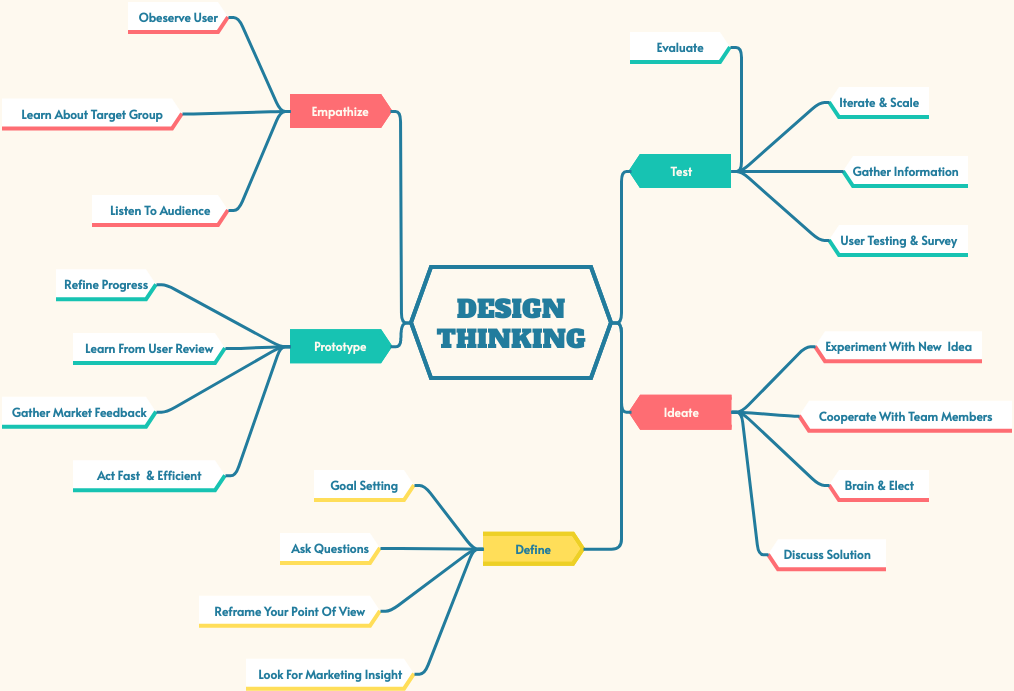
Design thinking has emerged as a transformative, human‑centered approach to complex problem solving, emphasizing empathy, ideation, prototyping, and iterative refinement. In the context of school leadership training, this methodology offers a structured yet flexible framework for principals and administrators to tackle “wicked” educational challenges—ranging from equity gaps and curriculum redesign to stakeholder engagement and organizational culture shifts. This manuscript investigates the integration of design thinking into a four‑day intensive leadership program and its subsequent impact on 200 school leaders across urban, suburban, and rural districts. Utilizing a mixed‑methods survey administered six weeks post‑training, we measured changes in participants’ confidence across the five design thinking stages, frequency of design‑based practices in their leadership, and perceived outcomes for school innovation. Results reveal statistically significant gains in empathy‑driven problem framing (ΔM = 1.4), ideation capacity (ΔM = 0.9), prototyping frequency (ΔM = 1.6), and stakeholder collaboration (ΔM = 1.1), all at p < .001. Qualitative feedback underscores the emergence of new leadership rituals—such as student “listening tours,” cross‑functional innovation teams, and rapid, low‑stakes pilot testing—that have reshaped decision‑making processes and fostered a culture of collective ownership. Participants also reported enhanced resilience in addressing unforeseen disruptions, citing design‑thinking mindsets as instrumental in navigating the post‑pandemic educational landscape. Key barriers included time constraints and resource limitations, while ongoing coaching and peer‑learning cohorts were identified as critical enablers. This study contributes to filling a gap in the literature on design‑oriented leadership development and offers concrete recommendations for embedding design thinking into both pre‑service preparation and continuous professional learning. By equipping school leaders with tools to empathize deeply, frame problems strategically, generate creative solutions, and iterate responsively, design thinking holds promise for catalyzing sustainable, equity‑centered innovation in K–12 environments.
Keywords
Design thinking; school leadership; professional development; innovation; educational change
References
- https://online.visual-paradigm.com/repository/images/0ce798be-217d-42e6-855a-120c3432cd04.png
- https://www.researchgate.net/publication/281870517/figure/fig1/AS:391494302224384@1470350923119/Flowchart-of-Innovation-with-Respect-to-Informational-Technology-and-Nostalgia.png
- Brown, T. (2009). Change by design: How design thinking creates new alternatives for business and society. HarperCollins.
- Carroll, M., Fulton, R., & Doerr, H. (2013). Fostering a culture of innovation in schools: A design thinking approach. Journal of Educational Leadership, 10(2), 45–60.
- Cross, N. (2011). Design thinking: Understanding how designers think and work. Berg.
- Doty, J. (2014). Design thinking for school leaders: A toolkit for transformation. Harvard Education Press.
- Goldman, S., Popovic, T., & Pollicino, J. (2017). Innovation by design: Applying human‐centered design in schools. Journal of Educational Change, 18(3), 299–320. https://doi.org/10.1007/s10833‑017‑9299‑2
- Kim, M., Davis, N., & Sinatra, G. M. (2015). Designing for creativity and collaboration: Examining the impact of design thinking. Journal of Educational Technology & Society, 18(4), 123–137.
- Kolb, D. A. (1984). Experiential learning: Experience as the source of learning and development. Prentice Hall.
- Kolko, J. (2015). How design thinking can drive educational change. Education Week, 35(21), 26–28.
- Kraft, M. A., & Papay, J. P. (2014). Can professional environments in schools promote teacher development? Educational Evaluation and Policy Analysis, 36(4), 476–500. https://doi.org/10.3102/0162373713519496
- Leithwood, K., & Jantzi, D. (2005). A review of transformational school leadership research. Educational Administration Quarterly, 41(4), 764–789. https://doi.org/10.1177/0013161X04268844
- Meinel, C., & Leifer, L. (Eds.). (2011). Design thinking research (Vol. 1). Springer.
- Plattner, H., Meinel, C., & Leifer, L. (2012). Design thinking: Understand – improve – apply. Springer.
- Razzouk, R., & Shute, V. (2012). What is design thinking and why is it important? Review of Educational Research, 82(3), 330–348. https://doi.org/10.3102/0034654312457429
- Rittel, H. W. J., & Webber, M. M. (1973). Dilemmas in a general theory of planning. Policy Sciences, 4(2), 155–169. https://doi.org/10.1007/BF01405730
- Robinson, V. M. J., Lloyd, C. A., & Rowe, K. J. (2008). The impact of leadership on student outcomes: An analysis of the differential effects of leadership types. Educational Administration Quarterly, 44(5), 635–674. https://doi.org/10.1177/0013161X08321509
- Senge, P. M., Hamilton, H., & Kania, J. (2015). The dawn of system leadership. Stanford Social Innovation Review, 13(1), 26–33.
- Thompson, A., & Goldstein, J. (2014). Design thinking as an educational framework for leadership development. International Journal of Leadership in Education, 17(3), 329–345. https://doi.org/10.1080/13603124.2013.826333