
Certificate: View Certificate
Published Paper PDF: View PDF
Lisha Thomas
Independent Researcher
Kerala, India
Abstract
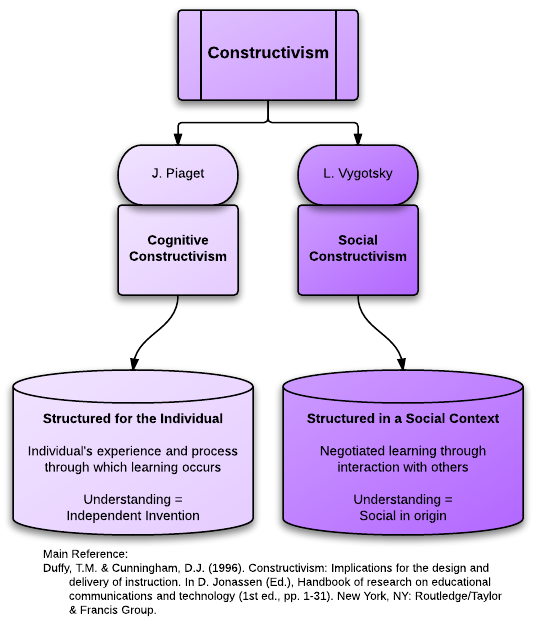
Constructivist pedagogy positions learners as active sense‑makers who negotiate, justify, and revise mathematical ideas through interaction with tasks, peers, tools, and teachers. In India, although policy blueprints such as the NCF 2005 endorse child‑centred, inquiry-rich mathematics, everyday practice still leans on algorithmic drill and summative testing. This study interrogates that policy–practice gap by (a) synthesizing global and Indian literature on constructivist mathematics teaching, and (b) reporting findings from an eight‑week, mixed‑methods intervention across nine diverse schools in Maharashtra, Tamil Nadu, and Uttar Pradesh (N = 360; Grades 6–8). Quantitative analyses (paired t‑tests, ANCOVA) revealed large, statistically significant gains in conceptual understanding (Cohen’s d = 1.07) and problem‑solving (d = 0.95). Attitudinal shifts were equally notable—62% of learners reported reduced mathematics anxiety and 71% affirmed that peer discussion helped mathematics “make sense.” Qualitative evidence from classroom observations, teacher journals, and student focus groups illuminated four catalytic processes: dialogic discourse, material/contextual mediation, embedded formative assessment, and peer scaffolding. Yet, systemic constraints—oversized classes, exam pressure, pacing guides, and limited teacher autonomy—tempered the breadth and durability of change. The paper argues for a contextually adapted constructivism that leverages multilingual resources, culturally familiar problem contexts, and low‑cost manipulatives, while aligning assessment regimes with reasoning and representation. Recommendations include sustained professional development focused on discourse moves and task design, collaborative planning time for teachers, and policy-level assessment innovation. Future research should examine technology-enabled constructivism, longitudinal retention and transfer, and equity-focused analyses of discourse to ensure that the benefits of constructivist mathematics reach all learners.
Keywords
Constructivism; Mathematics Education; India; Conceptual Understanding; Problem-Solving; Student Discourse; Teacher Professional Development; Assessment Reform
References
- https://edtechtheory.weebly.com/uploads/4/2/1/7/4217401/35408_orig.png
- https://rtipress.scholasticahq.com/article/17241-assessment-as-a-service-not-a-place-transitioning-assessment-centers-to-school-based-identification-systems/attachment/44643.jpg
- Black, P., & Wiliam, D. (1998). Assessment and classroom learning. Assessment in Education: Principles, Policy & Practice, 5(1), 7–74. https://doi.org/10.1080/0969595980050102
- Bruner, J. S. (1961). The act of discovery. Harvard Educational Review, 31(1), 21–32.
- Cobb, P., & Yackel, E. (1996). Constructivist, emergent, and sociocultural perspectives in the context of developmental research. Educational Psychologist, 31(3–4), 175–190. https://doi.org/10.1080/00461520.1996.9653265
- Cohen, J. (1988). Statistical power analysis for the behavioral sciences (2nd ed.). Lawrence Erlbaum.
- Hiebert, J., & Wearne, D. (1996). Instruction, understanding, and skill in multidigit addition and subtraction. Cognition and Instruction, 14(3), 251–283. https://doi.org/10.1207/s1532690xci1403_1
- Kilpatrick, J., Swafford, J., & Findell, B. (Eds.). (2001). Adding it up: Helping children learn mathematics. National Academies Press.
- National Council of Educational Research and Training. (2005). National curriculum framework 2005. NCERT.
- Piaget, J. (1977). The development of thought: Equilibration of cognitive structures. Viking Press.
- Rampal, A. (2003). Mathematics education in India: Status and challenges. International Journal of Mathematics Education in Science and Technology, 34(4), 617–622. https://doi.org/10.1080/0020739031000108535
- Sawada, D., Piburn, M. D., Judson, E., Turley, J., Falconer, K., Benford, R., & Bloom, I. (2002). Measuring reform practices in science and mathematics classrooms: The Reformed Teaching Observation Protocol. School Science and Mathematics, 102(6), 245–253. https://doi.org/10.1111/j.1949-8594.2002.tb17883.x
- Subramaniam, K. (2014). Mathematics education in India—Progress and challenges. Proceedings of the 12th International Congress on Mathematical Education, 21–41. Springer.
- von Glasersfeld, E. (1995). Radical constructivism: A way of knowing and learning. Falmer Press.
- Vygotsky, L. S. (1978). Mind in society: The development of higher psychological processes. Harvard University Press.
- Wiliam, D. (2011). Embedded formative assessment. Solution Tree Press.