
Certificate: View Certificate
Published Paper PDF: View PDF
Rakesh Chandra Patel
Independent Researcher
Gujarat, India
Abstract
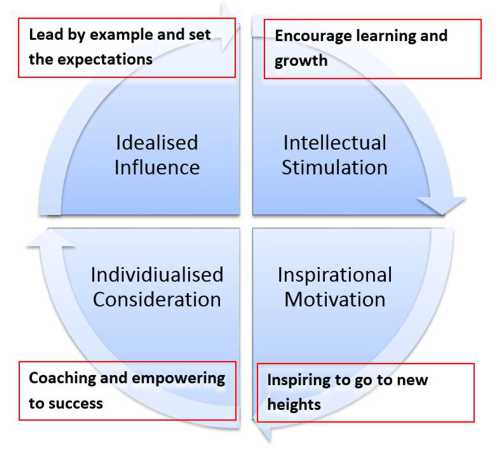
Experiential learning has increasingly been positioned as a powerful pedagogical strategy in the preparation of school leaders who must navigate complex, uncertain, and culturally diverse educational landscapes. This manuscript critically investigates how structured experiential learning projects—ranging from problem-based field inquiries and design-thinking challenges to community immersion, action research, and simulation exercises—shape the knowledge, skills, and dispositions of aspiring and in-service school leaders. Grounded in Kolb’s experiential learning cycle, situated learning theory, and transformational leadership frameworks, the study synthesizes extant literature and presents an illustrative mixed-methods project conducted with 120 leadership trainees across government, private, and low-fee schools. Quantitative data (pre/post self-efficacy scales, leadership competency rubrics) and qualitative evidence (reflective journals, focus groups, project artefacts) converge to show significant gains in instructional leadership, collaborative decision-making, data-informed planning, and ethical responsiveness. Results further indicate that project authenticity, iterative reflection, and mentor scaffolding are key mediators of impact, while time constraints, assessment misalignment, and uneven community partnerships can limit effectiveness. The manuscript concludes with a conceptual model of experiential leadership preparation, actionable recommendations for curriculum designers, policy makers, and accreditation bodies, and avenues for future research on scaling, equity, and digital augmentation of experiential projects. The discussion underscores that experiential learning is not a panacea but a catalytic design choice that, when intentionally implemented, cultivates reflective, resilient, and equity-oriented school leaders capable of leading learning organizations in volatile contexts.
Keywords
Experiential learning; school leadership training; project-based learning; reflective practice; action research; transformational leadership; Kolb cycle; instructional leadership; educational change; professional development
References
- https://cdn.prod.website-files.com/6516813912555e8b460c1f1e/66ccc06099a70e37c6ddb133_660eae4a48ce5ac2bf521426_CkiTZnxAQup75sweSQbeB3nuOa3HJ04DzYzn0IU_3KqvBPFV8W27vzvsCnMgK_EybPSooASjm0Dr74Mjpg6RcYYBZzjoJ1u6AIKpUOIaebxz0T76RZ7OxryLTEi55OxL-TggwZ9tQTQfYzDXUz2GSwU.png
- https://www.educational-business-articles.com/wp-content/uploads/transformational-leadership.jpg
- Boud, D., Keogh, R., & Walker, D. (1985). Reflection: Turning experience into learning. Routledge.
- Braun, V., & Clarke, V. (2006). Using thematic analysis in psychology. Qualitative Research in Psychology, 3(2), 77–101. https://doi.org/10.1191/1478088706qp063oa
- Darling-Hammond, L., LaPointe, M., Meyerson, D., Orr, M. T., & Cohen, C. (2007). Preparing school leaders for a changing world: Lessons from exemplary leadership development programs. Stanford Educational Leadership Institute.
- Gibbs, G. (1988). Learning by doing: A guide to teaching and learning methods. Oxford Polytechnic.
- Kolb, D. A. (1984). Experiential learning: Experience as the source of learning and development. Prentice Hall.
- Lave, J., & Wenger, E. (1991). Situated learning: Legitimate peripheral participation. Cambridge University Press.
- Leithwood, K., Harris, A., & Hopkins, D. (2008). Seven strong claims about successful school leadership. School Leadership & Management, 28(1), 27–42. https://doi.org/10.1080/13632430701800060
- Mezirow, J. (2000). Learning as transformation: Critical perspectives on a theory in progress. Jossey-Bass.
- Schön, D. A. (1983). The reflective practitioner: How professionals think in action. Basic Books.
- Spillane, J. P. (2006). Distributed leadership. Jossey-Bass.
- York-Barr, J., & Duke, K. (2004). What do we know about teacher leadership? Findings from two decades of scholarship. Review of Educational Research, 74(3), 255–316. https://doi.org/10.3102/00346543074003255
- Yukl, G. (2013). Leadership in organizations (8th ed.). Pearson.
- Zimmerman, J. (2011). Teaching and learning in a new era: School leaders as learners. Educational Management Administration & Leadership, 39(2), 131–142. https://doi.org/10.1177/1741143210390056
- Zull, J. E. (2002). The art of changing the brain: Enriching the practice of teaching by exploring the biology of learning. Stylus.