
Certificate: View Certificate
Published Paper PDF: View PDF
Ritu Patel
Independent Researcher
India
Abstract
Outcome-Based Education (OBE) has emerged as a transformative approach in engineering education, shifting the focus from content delivery to demonstrable learner achievements. This manuscript examines the adoption and efficacy of OBE in online engineering colleges, exploring how virtual learning environments can be aligned with program outcomes, course outcomes, and requisite competencies. Through a convergent mixed‑methods study—comprising document analysis of accreditation reports, curriculum maps, and assessment artifacts, alongside surveys of faculty (n=45) and final‑year students (n=320) across five accredited online engineering institutions—key factors influencing effective OBE implementation were identified. Results indicate that clear articulation of outcomes, robust alignment of assessments, continuous feedback loops, and comprehensive faculty development programs are critical success factors. Moreover, the integration of virtual laboratories, e‑portfolios, and automated analytics within learning management systems enhances transparency and supports self‑regulated learning. Challenges include technological constraints such as bandwidth variability, variability in student self‑regulation skills, and pockets of faculty resistance to pedagogical change. Despite these barriers, participants reported increased motivation and deeper engagement when OBE principles guided course design. Recommendations are provided for institutional policymakers, instructional designers, and accrediting bodies to strengthen OBE practices online. By detailing practical strategies and highlighting both enablers and obstacles, this study contributes to the limited empirical research on OBE in fully online engineering contexts and offers a roadmap for stakeholders seeking to enhance graduate competencies, ensure continuous program improvement, and ultimately produce practice‑ready engineers in the digital age.
Keywords
Outcome-based education; online engineering; virtual learning; accreditation; assessment alignment
References
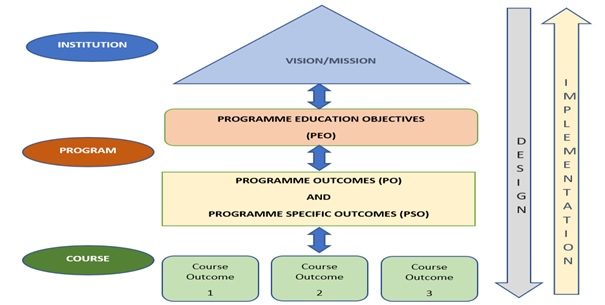
- https://www.icloudems.com/wp-content/uploads/2021/09/OBE-framework.jpg
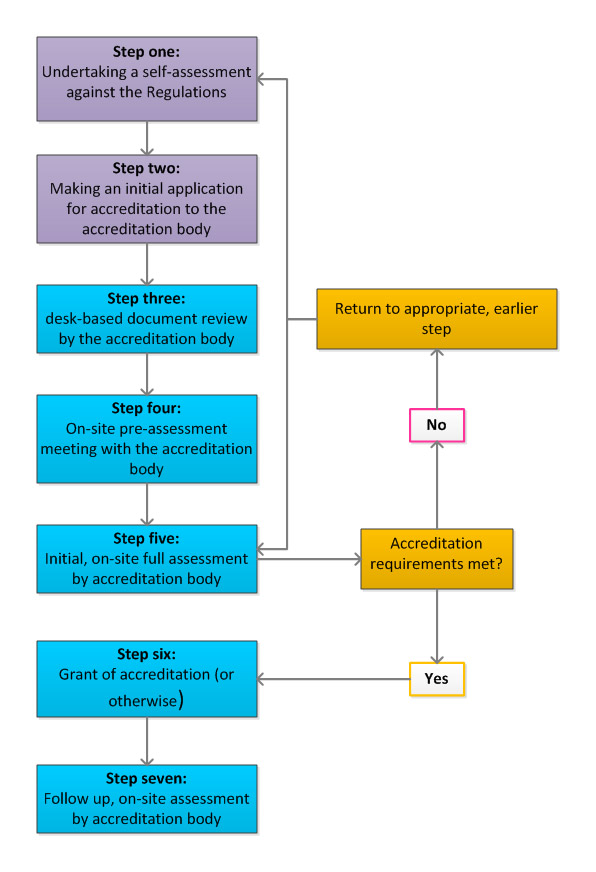
- https://www.building.govt.nz/assets/Uploads/building-officials/bca-accreditation/key-steps.jpg
- Biggs, J. B., & Tang, C. S. (2011). Teaching for Quality Learning at University (4th ed.). Maidenhead, UK: McGraw‑Hill Open University Press.
- Chang, V., Florentine, A., & Fernandez, S. (2013). The role of outcome‑based education in contemporary engineering curricula. European Journal of Engineering Education, 38(2), 146–158.
- Harden, R. M. (2002). Learning outcomes and instructional objectives: Is there a difference? Medical Teacher, 24(2), 151–155.
- Horta, H., & Sarrico, C. S. (2010). Impact of outcome‑based approaches on quality assurance in higher education: Evidence from Europe. Higher Education Policy, 23(3), 285–311.
- Reddy, P., & Andrade, H. (2010). A review of rubric use in higher education. Assessment & Evaluation in Higher Education, 35(4), 435–448.
- Spady, W. G. (1994). Outcome‑Based Education: Critical Issues and Answers. Arlington, VA: American Association of School Administrators.
- Yusoff, W. F. W., Rahman, W., & Borhan, H. (2016). Implementing outcome‑based education in the Faculty of Medicine, Universiti Kebangsaan Malaysia: A case study. Medical Teacher, 28(3), 250–256.