
Certificate: View Certificate
Published Paper PDF: View PDF
Anil Bhatia
Independent Researcher
India
Abstract
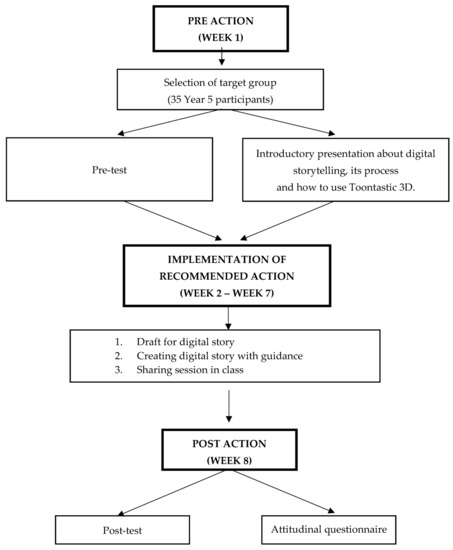
Student resilience—the capacity to adapt positively in the face of adversity—is crucial for academic success, psychological well‑being, and long‑term personal growth. Digital storytelling (DST), which combines narrative construction with multimedia elements, has emerged as a promising intervention to bolster resilience by fostering self‑reflection, meaning‑making, and social connection within learning environments. This manuscript examines the impact of a structured six‑week DST program on resilience, engagement, and self‑efficacy among 100 secondary‑school students. Using the 25‑item Connor‑Davidson Resilience Scale (CD‑RISC) and a 20‑item Student Engagement Scale (SES), we measured resilience and engagement before and after the workshop. Qualitative data were collected via open‑ended reflection prompts, capturing personal narratives of adversity, coping strategies, and perceived shifts in mindset. Quantitative results revealed substantial increases in resilience (pre‑test M = 58.2, SD = 9.1; post‑test M = 66.7, SD = 7.8; t(99) = 8.34, p < .001, d = 0.84) and engagement (pre‑test M = 62.5, SD = 10.4; post‑test M = 71.3, SD = 9.2; t(99) = 6.12, p < .001, d = 0.61). Thematic analysis identified key qualitative themes—including enhanced self‑efficacy, peer support, narrative coherence, and creative empowerment—that illuminate how DST facilitates reflective processing and communal validation of personal challenges. These findings suggest that DST not only strengthens intrapersonal resources but also cultivates a supportive peer ecosystem, reinforcing collective coping mechanisms. Implications for educational practice include integrating DST into social‑emotional learning frameworks, training educators in narrative facilitation techniques, and designing curriculum modules that leverage multimedia storytelling to nurture resilience. Limitations of this study include its quasi‑experimental design, reliance on self‑report measures, and lack of long‑term follow‑up. Future research should employ randomized controlled trials, extend follow‑up assessments beyond immediate post‑tests, and explore DST adaptations for diverse cultural and socio‑economic contexts.
Keywords
Student resilience; digital storytelling; narrative therapy; multimedia learning; adolescent well‑being
References
- https://www.mdpi.com/sustainability/sustainability-14-09215/article_deploy/html/images/sustainability-14-09215-g002-550.jpg
- https://ehj.ssu.ac.ir/files/site1/images/999.jpg
- Barrett, H. C. (2006). Researching and evaluating digital storytelling as a deep learning tool. International Journal of Learning Technology, 2(1), 103–118. https://doi.org/10.1504/IJLT.2006.009124
- Braun, V., & Clarke, V. (2006). Using thematic analysis in psychology. Qualitative Research in Psychology, 3(2), 77–101. https://doi.org/10.1191/1478088706qp063oa
- Bruner, J. (1990). Acts of meaning. Harvard University Press.
- Kearney, M., & Schuck, S. (2006). Spotlight on digital storytelling: What’s the story? Learning, Media and Technology, 31(3), 287–302. https://doi.org/10.1080/17439880600922804
- Lambert, J. (2013). Digital storytelling: Capturing lives, creating community (4th ed.). Routledge.
- Luthar, S. S., & Cicchetti, D. (2000). The construct of resilience: Implications for interventions and social policies. Development and Psychopathology, 12(4), 857–885. https://doi.org/10.1017/S0954579400004156
- Masten, A. S. (2001). Ordinary magic: Resilience processes in development. American Psychologist, 56(3), 227–238. https://doi.org/10.1037/0003-066X.56.3.227
- Masten, A. S. (2014). Ordinary magic: Resilience in development (2nd ed.). Guilford Press.
- McAdams, D. P. (2001). The psychology of life stories. Review of General Psychology, 5(2), 100–122. https://doi.org/10.1037/1089-2680.5.2.100
- Pennebaker, J. W., & Seagal, J. D. (1999). Forming a story: The health benefits of narrative. Journal of Clinical Psychology, 55(10), 1243–1254. https://doi.org/10.1002/(SICI)1097-4679(199910)55:10<1243::AID-JCLP6>3.0.CO;2-N
- Rutter, M. (1987). Psychosocial resilience and protective mechanisms. American Journal of Orthopsychiatry, 57(3), 316–331. https://doi.org/10.1111/j.1939-0025.1987.tb03541.x
- Robin, B. R. (2008). The effective uses of digital storytelling as a teaching and learning tool. Handbook of Research on Teaching Literacy through the Communicative and Visual Arts, 429–440. https://doi.org/10.4018/978-1-59904-868-6.ch028
- Ryan, R. M., & Deci, E. L. (2000). Self‑determination theory and the facilitation of intrinsic motivation, social development, and well‑being. American Psychologist, 55(1), 68–78. https://doi.org/10.1037/0003-066X.55.1.68
- Wang, Q., & Geale, S. K. (2015). Digital storytelling as a student-centered pedagogy for culturally and linguistically diverse adults. Adult Education Quarterly, 65(3), 253–271. https://doi.org/10.1177/0741713614561865
- Yang, Y.-T. C. (2012). Digital storytelling for enhancing student academic achievement, critical thinking, and learning motivation: A year‑long experimental study. Computers & Education, 59(2), 339–352. https://doi.org/10.1016/j.compedu.2012.02.020
- Yates, T. M., Tyrell, F. A., & Masten, A. S. (2015). Resilience theory and the practice of positive psychology from individuals to societies. In K. M. Sheldon, T. B. Kashdan, & M. F. Steger (Eds.), Designing positive psychology: Taking stock and moving forward (pp. 545–566). Oxford University Press.
- Zembylas, M. (2007). The researcher’s emotion work: Ethics, politics, and methods. International Journal of Qualitative Studies in Education, 20(1), 1–18. https://doi.org/10.1080/09518390601178860
- Zimmerman, M. A., & Arunkumar, R. (1994). Resiliency research: Implications for schools and policy. Social Policy Report, 8(1), 1–