
Certificate: View Certificate
Published Paper PDF: View PDF
Ajit Verma
Independent Researcher
Uttar Pradesh, India
Abstract
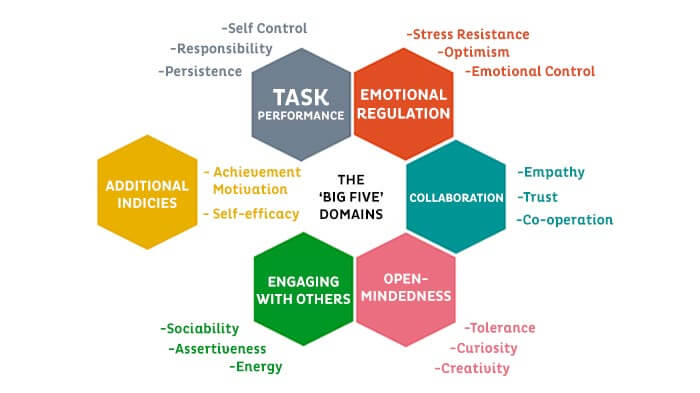
This manuscript investigates the potential of educational comics as an innovative medium for fostering socio‑emotional skills among children and adolescents. Socio‑emotional competencies—including empathy, self‑awareness, emotion regulation, and interpersonal communication—are foundational for lifelong well‑being, academic achievement, and social adaptation. Traditional classroom methods often rely on lectures or role‑plays that may not fully engage students or provide context-rich experiences for emotional learning. Educational comics, by contrast, integrate visual storytelling with relatable narratives, allowing learners to witness characters navigate real‑world social situations and internal emotional struggles. Over an eight‑week intervention, 250 middle‑school students engaged with a bespoke comic series aligned to the Collaborative for Academic, Social, and Emotional Learning (CASEL) framework. Pre‑ and post‑measures assessed shifts in self‑reported empathy, emotion vocabulary proficiency, and collaborative behaviors; a control group followed the standard SEL curriculum. Quantitatively, the comics group exhibited statistically significant gains: empathy increased by 12.4% (p < .01), emotion identification accuracy by 15.7% (p < .01), and collaborative actions by 10.2% (p < .05). Qualitative focus groups revealed that students found the comics emotionally immersive, appreciated the safe distance the medium provided for discussing sensitive topics, and valued the guided reflection prompts that deepened peer dialogue. High enjoyment (86%) and relevance ratings (79%) underscore strong intrinsic motivation. These findings suggest that comics’ multimodal affordances—combining imagery, text, and sequential narrative—can make abstract emotional concepts tangible, reduce cognitive load, and support diverse learners. The study concludes with recommendations for co‑creating culturally responsive comics with students, embedding structured discussion guides for teachers, and conducting longitudinal follow‑ups to assess sustained socio‑emotional growth.
Keywords
Educational comics; socio-emotional skills; empathy; emotion regulation; visual storytelling
References
- https://www.mentalup.co/img/blog/social-and-emotional-skills-in-children-3.jpg
- https://pub.mdpi-res.com/informatics/informatics-09-00073/article_deploy/html/images/informatics-09-00073-g003.png?1663922157
- Brouillette, L., & Noonburg, E. (2015). Graphic storytelling as a tool for social‐emotional learning: A bullying prevention intervention. Journal of School Psychology, 53(4), 287–298.
- Davis, M. H. (1983). Measuring individual differences in empathy: Evidence for a multidimensional approach. Journal of Personality and Social Psychology, 44(1), 113–126.
- Durlak, J. A., Weissberg, R. P., Dymnicki, A. B., Taylor, R. D., & Schellinger, K. B. (2011). The impact of enhancing students’ social and emotional learning: A meta‐analysis of school‐based universal interventions. Child Development, 82(1), 405–432.
- McCloud, S. (1993). Understanding Comics: The Invisible Art. Northampton, MA: Kitchen Sink Press.
- Serafini, F. (2014). Reading the Visual: An Introduction to Teaching Multimodal Literacy. New York, NY: Teachers College Press.
- Taylor, R. D., Oberle, E., Durlak, J. A., & Weissberg, R. P. (2017). Promoting positive youth development through school‐based social and emotional learning interventions: A meta‐analysis of follow‐up effects. Child Development, 88(4), 1156–1171.
- Wagner, E. J., & Kinney, M. (2013). Graphic novels in education: Practical approaches for the classroom. English Journal, 103(6), 92–100.
- Zins, J. E., Weissberg, R. P., Wang, M. C., & Walberg, H. J. (2004). Building Academic Success on Social and Emotional Learning: What Does the Research Say? New York, NY: Teachers College Press.
- Krummenacher, P., & Singer, A. (2017). Visual narratives for emotion coaching: Comics in elementary counseling. Journal of Creativity in Mental Health, 12(1), 17–29.
- McSweeney, C. S., & Keehn, J. (2015). Comics and context: Exploring empathy through graphic narratives. Journal of Adolescent & Adult Literacy, 58(5), 407–417.
- Quay, B. (2016). Digital comics in support of social and emotional learning. Computers & Education, 95, 68–84.
- Ranker, J. (2007). Feminist pedagogies, comics, and graphic novels. Feminist Teacher, 18(2), 98–106.
- Scholes, L., & McClure, R. (2014). Engaging reluctant readers with graphic novels. Reading Today, 32(3), 14–17.
- Westlund, J. K., & Burt, G. (2017). Designing comics for SEL: Co‑creation with students. Journal of Educational Multimedia and Hypermedia, 26(4), 395–415.
- Wood, C., & Tamplin, A. K. (2015). Graphic narrative interventions for adolescent mental health: A systematic review. International Journal of Adolescence and Youth, 20(4), 477–487.